Your Travel Guide to Thailand
All information & tips to prepare your trip in Thailand
All you need to know to visit Koh Jum
Southern Thailand
975 km from Bangkok
Province of Krabi
Thai prononciation : Go djam


Travel guide to visit Koh Jum
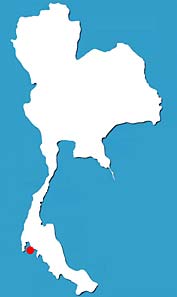
The small island of Koh Jum is located between Krabi and Koh Lanta, opposite Koh Phi Phi but closer to the coast. Less well-known than its neighbors, it is one of those few islands in Thailand that, while certainly touristy, remain wild and retain a strong local character.
IMPORTANT: Even though you will see Koh Jum written everywhere, the island's name is actually pronounced Koh Djam. It clearly has an a sound, not ou, in its name written in Thai. And the locals will correct you. Well, those who don't deal too much with tourists. The others have become accustomed to the mistake.
Quite wild, Koh Jum is exactly the kind of place where you come for a few days and end up staying longer, charmed by its peaceful and pleasant atmosphere.
This is a destination for those seeking relaxation in a laid-back, natural setting by the sea. Those who enjoy parties, activities, or endless sightseeing will likely get bored quite quickly. The beaches are sometimes rocky, the water isn't as turquoise as Koh Lanta, and even less so than Koh Phi Phi, and the tide is sometimes too low for swimming, but Koh Jam is clearly not an island for the same type of tourist. Hyperactive types who love a lively atmosphere and a plethora of activities won't like it; there are only a handful of bars and little to do during the day, except perhaps try out the half-dozen beaches on the west coast, go kayaking, and relax in a few nice spots. That said, Koh Jum's hotels and some local agencies offer day trips, particularly to Koh Phi Phi and Maya Bay, or to the popular islands of Krabi and Railay, and even some diving excursions.The main village, Ban Ko Jum, is located in the southeast of the island. It has a few shops and restaurants. The island is home to approximately 3,000 people, the majority of whom are Muslim, but there are also Sea Gypsy communities and a very small Buddhist minority. Koh Jum is quite touristy, so it's fairly easy to buy alcohol, especially beer. Although it's a predominantly Muslim island, you'll almost never find pork on restaurant menus, and it's requested that you don't walk around in your swimsuit anywhere other than on the beach or possibly in hotel corridors.
To see all optiosn to get around in Koh Jum, read our dedicated paragraph about getting around in Koh Jum.
Accommodations in Koh Jum
You won't find any large 4 or 5-star hotel complexes on Koh Jum. At least not yet. But there are a few slightly more luxurious options like the Horizon Beach Resort or the Koh Jum Beach Villas, and homestays, sometimes with very basic amenities, and everything in between. Be aware that some hotels on Koh Jum are only accessible via a bumpy dirt road and are therefore somewhat isolated. They are often very good, I'm thinking in particular of the Koh Jum Resort, but it's something to keep in mind. They do rent scooters, but it's best to be experienced because the road is sometimes like motocross. Koh Jum is very popular in December, January, and February, so book your accommodation in advance for these months, otherwise you risk not getting a room in your preferred location, or, if you leave it to the last minute, really struggling to find a place to sleep.Find accommodation in Koh Jum
My recommandations


Practical information about Koh Jum
Actually, Koh Jum refers to the southern part of the island, while Koh Pu is the name for the wilder north, although from a tourist perspective, the entire island is generally referred to as Koh Jum (which, again, is pronounced Koh Jam).
Be aware that Koh Jum, despite not being frequently mentioned (I myself rarely spoke about it for years to preserve its charm), is now very touristy for three months of the year: December, January, and February. Things slow down a bit in March, and then it enters the low season until November. During these three peak months, Koh Jum is very crowded with tourists, and booking accommodation in advance is recommended. I would say that the era of a peaceful island without many tourists is also somewhat over, at least during these three months.
This is a destination that has become quite touristy, with prices, especially in restaurants, and practices typical of very touristy islands. But between April and November, it's much quieter (prices for the hotels that remain open drop significantly), and even almost deserted from May to the end of October, with resorts and restaurants closing completely and tourists being primarily Thai. It must be said that from May to October, the winds are sometimes strong in Koh Jum and the weather isn't always so favorable. Note that there is an ATM in Koh Jum (not for very long, which shows the island's definite tourism development), next to the public hospital, and another not far from the Koh Jum International Clinic in the Ting Rai district. But it's best to bring cash because there's only one ATM and it can be out of order or out of money.
How to go to Koh Jum ?
To get to Koh Jum, there are several wooden ferry departures from Laem Kruat Pier in Krabi, and also speedboat lines from more distant destinations that stop there during the high season.
The ferry fare from Laem Kruat Pier is 140 THB per adult (but the last recorded price in April 2026 during the oil crisis was 180 THB; I'm not sure if it will go down afterward). There are several departures per day, at least three in the low season. The blue songthaews number 8557 (shared taxis) connect Krabi town center to Laem Kruat Pier (these are the ones that also stop at the airport). Alternatively, book a Grab or a private transfer. Once you arrive at Mutu Pier on Koh Jum, you'll find pickup trucks to take you to the various hotels on Koh Jum. Note that transfers between the pier and your accommodation are often offered free of charge by the hotel, at least for hotels (this isn't always the case for homestays).
How to get around in Koh Jum ?
To get around Koh Jum, renting a scooter is clearly the most practical option, but be careful: make sure your insurance covers scooter riding in Thailand beforehand and have an international driver's license with a motorcycle endorsement!
Alternatively, there are tuk-tuks that you can easily order through your hotel reception or guesthouse. There's even a tuk-tuk tour of Koh Jum island (last price found: 400 THB per person). And between the pier and the hotels, there are pickup trucks that operate at regulated prices displayed at Mutu Pier (many hotels offer free transfers to and from Mutu Pier).
Weather & climate in
Koh Jum has a tropical savanna climate. On the Andaman coast like Phuket, Krabi province has to a six months long rainy season between May and November with heavy rainfalls often brief but regular. On average, it rains less in Krabi than in Phuket.The best time to come to Koh Jum is from December to March and especially in January-February. During summer it rains oftent especially from August to the end of October, the worst period to come to Koh Jum.
How to ask in Thai to go to Koh Jum ?
I want to go to Koh Jum / Yak paï ti Go djam.Where is Koh Jum ? / Go djam you ti naï ?
10 Best Activities and Guided Tours to Do in Bangkok
Bangkok is very often your first port of call—or rather, airport of arrival—in Thailand. It is a highly eclectic city packed with unforgettable activities. I have curated a selection of what I consider to be the 10 best things to do in...