Your Travel Guide to Thailand
All information & tips to prepare your trip in Thailand
Travel to Cambodia: the practical guide
Why travel to Cambodia?
The one place not to miss in Cambodia is Angkor and its temples in the middle of the jungle. It is one of the most spectacular archaeological sites in the world and clearly the place that has fascinated me most in all my travels around the globe (and I have been to Egypt, my childhood dream). For them alone, Cambodia is worth the trip.
But of course the country is not just Angkor: a lively capital on the banks of the Mekong, peaceful colonial towns such as Battambang and Kampot, islands with still unspoilt beaches such as Koh Rong, rice fields as far as the eye can see, the Mekong dolphins and the hills of Mondulkiri.
The country is easy to travel around: distances are reasonable, the roads have improved a lot, Khmer food (amok, lok lak, Kampot pepper crab) is delicious and Cambodians are very welcoming. Prices are low and accommodation offers excellent value for money. From Thailand, it is the perfect addition to a trip to Southeast Asia.
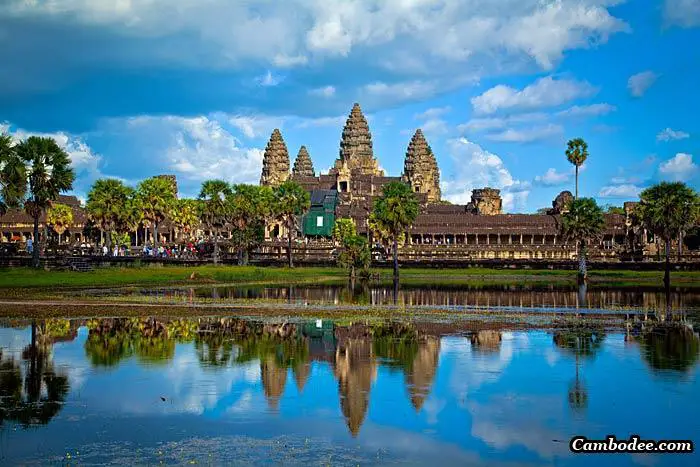
Cambodia at a glance
- Capital: Phnom Penh
- Language: Khmer; English is widely understood in tourism
- Currency: riel (KHR), but the US dollar is used everywhere
- Time zone: UTC+7, like Thailand (7 hours ahead of the UK in winter and 6 hours in summer)
- Electricity: 230 V, type A, C and G sockets
- Ideal length of stay: 10 days to 3 weeks
Important: the land border with Thailand is closed
Since June 2025, following the border conflict between the two countries, all land border crossings between Thailand and Cambodia are closed (Aranyaprathet – Poipet, Hat Lek – Cham Yeam, etc.), and no reopening date has been announced. To reach Cambodia from Thailand, you have to fly (Bangkok – Siem Reap or Bangkok – Phnom Penh, about 1 h 15 flight) or go via Laos or Vietnam. Areas close to the Thai border should be avoided; Siem Reap, Angkor and Phnom Penh are not affected. Check the latest situation, for example on the UK government travel advice, before you leave.
See all the ways to get to CambodiaThe temples of Angkor
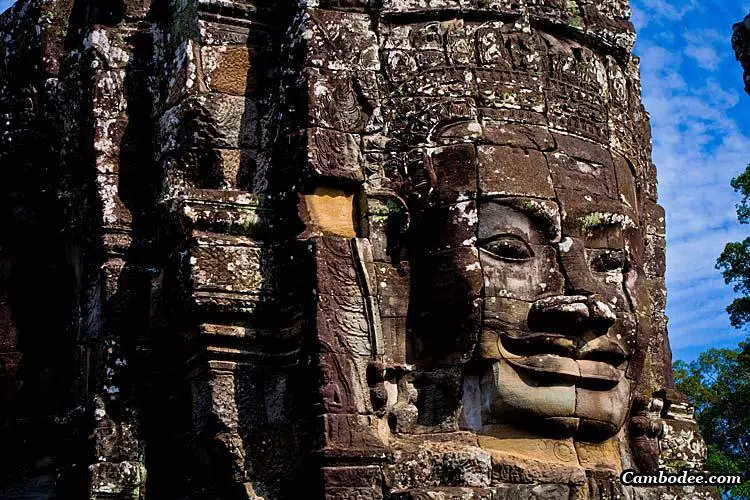
The capital of the Khmer Empire from the 9th to the 15th century, Angkor covers more than 400 km² north of Siem Reap. The site has dozens of temples: Angkor Wat, the largest religious monument in the world, the city of Angkor Thom and the face towers of the Bayon, Ta Prohm overgrown by silk-cotton trees, Banteay Srei and its uniquely delicate carvings, not forgetting Preah Khan, Neak Pean or Pre Rup at sunset.
The Angkor Pass is required to enter the park: $37 for 1 day, $62 for 3 days (to be used within 10 days) and $72 for 7 days (to be used within one month), free for children under 12 on presentation of their passport. It is sold at the official ticket office (Angkor Ticket Office, cards accepted) or online on the official Angkor Enterprise website. The ticket office opens at 5 am; from 4:30 pm, tickets bought are valid for the next day, which lets you see the sunset for free the day before.
Appropriate dress is required: shoulders and knees covered, otherwise you may be refused access to the upper levels of the temples (the Bakan of Angkor Wat, Phnom Bakheng). Set off early to enjoy the cooler hours and avoid the crowds, and take a break at the hottest time of day.
A good guide completely changes the visit: they bring the bas-reliefs to life, know the best times and help you avoid the crowds.
Find an English-speaking guide to visit AngkorVisa and entry requirements
Most nationalities, including British, American, Australian and Canadian citizens, need a 30-day tourist visa, with a passport valid for at least 6 months after the date you leave the country.
- E-visa (recommended): $30, to be applied for only on the official website evisa.gov.kh, with an ID photo and a copy of your passport. It is usually issued within 3 working days. Beware of websites that imitate the official one and charge twice the price.
- Visa on arrival: available at international airports (Phnom Penh, Siem Reap, Sihanoukville) and at some border crossings, for $30 to $35 in cash and an ID photo.
- E-Arrival, compulsory: all travellers must fill in the electronic arrival card within 7 days before entry on arrival.gov.kh or in the official app. It is free and replaces the paper forms (immigration, health and customs), but it is not a visa.
The tourist visa can be extended once for 30 days, through the immigration services or an agency. Overstaying costs $10 a day. The rules change regularly: check them with the embassy before you leave.
Health and vaccinations
No vaccination is compulsory for travellers arriving from Europe or North America (yellow fever is only required if you arrive from a country at risk). It is recommended to be up to date with routine vaccinations and to be vaccinated against hepatitis A. Depending on the length and type of trip, your doctor may advise typhoid, Japanese encephalitis (long stays in rural areas) or rabies (long or remote stays).
Malaria is present in rural and forest areas, but not in Phnom Penh or around the Tonle Sap, and the risk is negligible in the tourist area of Angkor. Dengue, transmitted by mosquitoes that bite during the day, is present throughout the country, especially in the rainy season: use repellent, wear covering clothes and sleep under a net. Only drink bottled or filtered water.
Private hospitals in Phnom Penh and Siem Reap are fine for common problems, but serious cases are often evacuated to Bangkok: travel insurance covering repatriation is essential. For personal advice, visit a travel clinic at least a month before you leave.
When to go to Cambodia?
- November to February: the best time. Dry and relatively cool season (25 to 30 °C), clear skies, ideal for Angkor. It is also the high season: book your hotels in advance, especially for Christmas, New Year and Chinese New Year.
- March to May: the hot season. 35 to 40 °C in the afternoon: visit the temples at dawn. Khmer New Year (mid-April) is very festive, but many Cambodians travel and transport is packed.
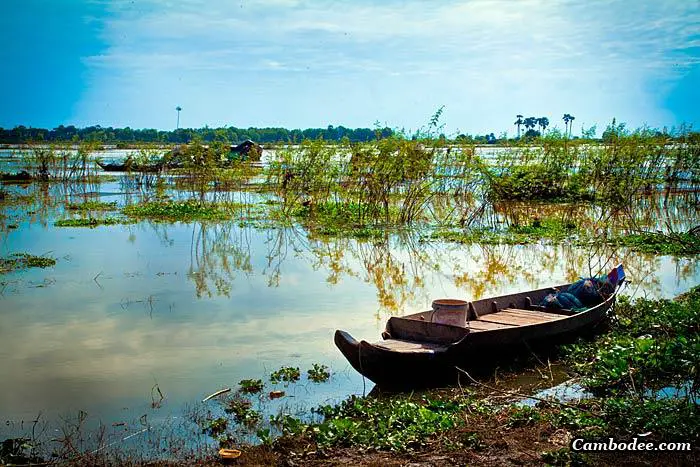
- June to October: the rainy season. Short but heavy showers, usually late in the day. The landscapes are green, the rice fields magnificent, the temples less crowded and prices lower. The Tonle Sap is at its highest, and it is the season for boats between Phnom Penh and Siem Reap. Some country tracks and islands become less accessible in September and October.
Money: dollars, riels, cards and ATMs
Cambodia lives with two currencies: the US dollar, used for almost everything (hotels, restaurants, transport, Angkor Pass), and the riel (about 4,000 riels to 1 dollar), used mainly for change under one dollar and in markets. Prices are often shown in both currencies.
- ATMs: plentiful in towns, they dispense dollars. Each withdrawal is charged by the Cambodian bank ($4 to $10 depending on the bank, on top of your own bank’s fees): withdraw rarely but in large amounts. Few or no ATMs on the small islands and in the countryside.
- Notes in good condition: torn, stained or written-on dollar notes are often refused. Bring new notes and keep small denominations ($1, $5 and $10) for tuk-tuks and markets.
- Exchanging pounds or euros: easy in Phnom Penh and Siem Reap, at market money changers or banks. Elsewhere, bring dollars.
- Bank cards: accepted in hotels, good restaurants and supermarkets, sometimes with a 2 to 3% surcharge. Let your bank know before you leave.
Safety
Cambodia is a safe country for travellers, with a few precautions. In Phnom Penh, bag snatching from motorbikes is common: keep your phone and bag on the inside, including in a tuk-tuk. In the countryside, landmines and unexploded ordnance remain: do not leave marked paths, especially around remote temples. Areas close to the Thai border have been advised against since the 2025 conflict. Finally, be wary of job offers that seem too good to be true found online: online scam networks recruit foreigners this way.
The main destinations in Cambodia
For a first trip, the classic itinerary links Siem Reap (Angkor), Battambang, Phnom Penh, then the coast with Kampot, Kep and the islands of Koh Rong. Between Phnom Penh and Battambang, stop at Kompong Chhnang and the floating village of Kompong Luong. With more time, head east to see the Mekong dolphins in Kratie and the hills of Mondulkiri.
Siem Reap and the temples of Angkor
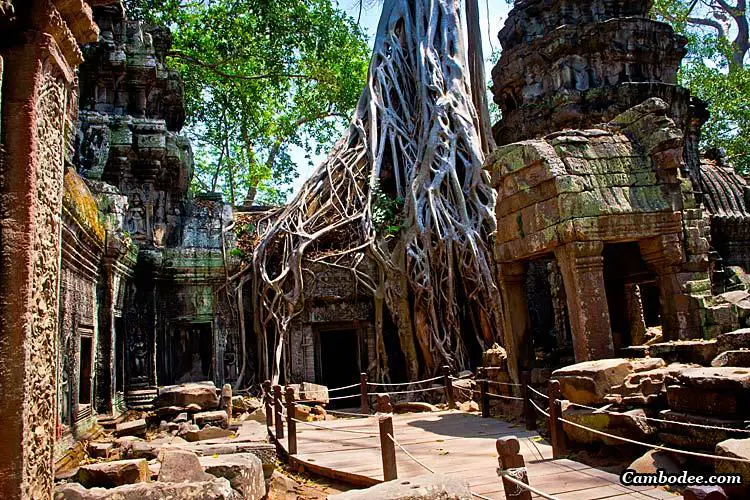
Siem Reap is the gateway to the Angkor Archaeological Park, a UNESCO World Heritage Site and one of the largest religious complexes in the world. People come for Angkor Wat at sunrise, the smiling faces of the Bayon in Angkor Thom, the giant roots of Ta Prohm and the pink sandstone lacework of Banteay Srei. Further afield, the waterfall and carvings of Phnom Kulen, the jungle-covered temple of Beng Mealea and the site of Koh Ker (UNESCO-listed in 2023) are each worth a day.
The town itself is pleasant: the old market, the banks of the Siem Reap River, the restaurants and bars of Pub Street, and the Phare circus show, performed by former students of a circus school in Battambang. The great Tonle Sap lake and its stilt villages (Kampong Phluk, Kampong Khleang) are an hour’s drive away.
Practical tips
- Allow 2 to 3 days for the main temples (3-day pass), 4 to 5 days with Kulen, Beng Mealea and Koh Ker.
- The new airport (SAI) is about 50 km from town: shuttle bus around $8 to $9, taxi $25 to $35, tuk-tuk around $15 (1 h 30).
- For the temples, hire a tuk-tuk for the day with its driver, or an electric bike for the small circuit.
- Avoid cheap tours to Chong Kneas on the Tonle Sap, known for scams (“compulsory” donations, overpriced boats).
Ride-hailing apps : Grab and PassApp (tuk-tuk, remorque and car)
Phnom Penh, the capital
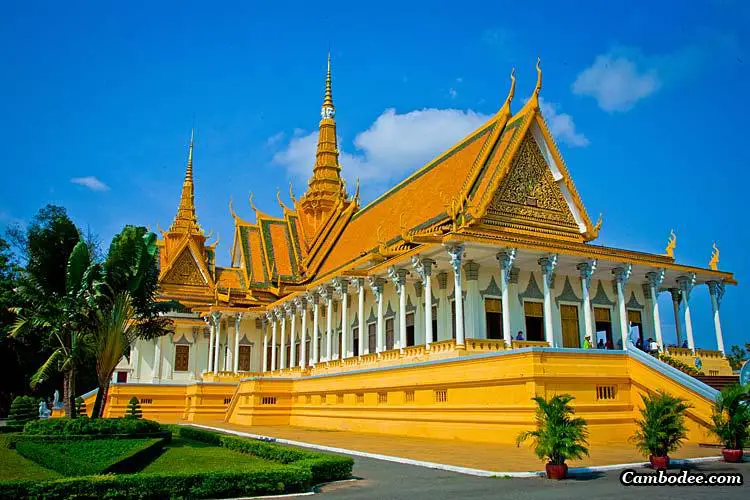
At the confluence of the Mekong and the Tonle Sap, Phnom Penh mixes pagodas, colonial villas and modern buildings. The must-sees: the Royal Palace and the Silver Pagoda, the National Museum and its collection of Khmer art, Wat Phnom and the art deco Central Market. Two visits are essential to understand the country’s history: the Tuol Sleng (S-21) genocide museum and the Choeung Ek genocidal centre, with an audio guide available in English.
In the evening, the riverside promenade (Sisowath Quay), the night markets and the rooftop bars offer a different atmosphere. You can also take a trip to Oudong, the former royal capital, or to the silk island of Koh Dach.
Practical tips
- 2 days are enough for the highlights.
- The new Techo airport (KTI) is 30 to 40 minutes from the centre: taxi $10 to $15, Grab or PassApp a little cheaper, express bus for a few dollars.
- At the Royal Palace, shoulders and knees must be covered.
- Beware of bag snatching from motorbikes: keep your phone and bag on the side away from the street, including in a tuk-tuk.
Ride-hailing apps : Grab, PassApp and WowNow (tuk-tuk, remorque and car)
Battambang
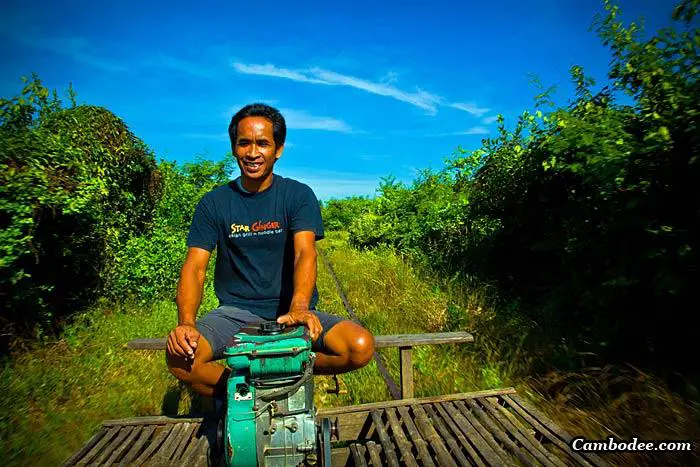
The country’s second city, Battambang has kept a fine collection of colonial houses and a very pleasant provincial atmosphere. Around it: Phnom Sampov and its exodus of millions of bats at sunset, the hilltop temple of Wat Banan, the famous bamboo train (norry) and villages where rice paper and fish paste are made. In the evening, the Phare Ponleu Selpak circus, the original school of the Phare artists.
Practical tips
- 3 to 4 hours by road from Siem Reap and about 5 hours from Phnom Penh, or by train from Phnom Penh.
- The countryside is best explored by tuk-tuk for the day or by bicycle.
Ride-hailing apps : PassApp (no Grab)
Kompong Chhnang
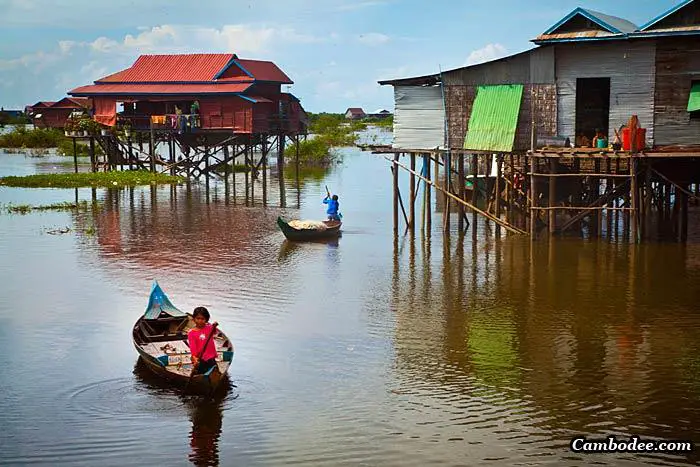
A river port on the Tonle Sap, Kompong Chhnang (the “port of pots”) is one of the most authentic stops between Phnom Penh and Battambang. By boat, you visit the floating villages and stilt villages with their houses, schools and fish farms, and nearby pottery villages such as Andong Russey, where women shape the jars by hand, without a wheel.
Practical tips
- About 2 hours from Phnom Penh on National Road 5: doable as a day trip or as a stop on the way to Battambang.
- Negotiate the boat at the landing stage and agree on the length of the trip before setting off.
No Grab or equivalent here: tuk-tuk, motorbike taxi or boat, price to be negotiated.
Kompong Luong, the floating village
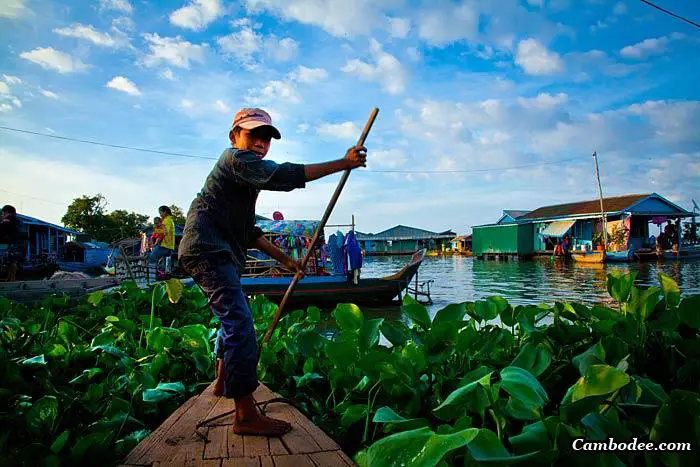
In Pursat province, Kompong Luong is one of the largest floating villages on the Tonle Sap: houses, schools, a pagoda, shops and even petrol stations float on the lake and move with the water level. Much less visited than the villages near Siem Reap, it offers a striking insight into the life of the lake communities.
Practical tips
- Access via Krakor, on National Road 5 between Phnom Penh and Battambang (about 4 hours from Phnom Penh), then by boat.
- The easiest option is to sleep in Pursat, about forty kilometres away.
- The boat trip lasts 1 to 2 hours: agree on the price and the route before setting off.
No Grab or equivalent here: tuk-tuk, motorbike taxi or boat, price to be negotiated.
Kampot
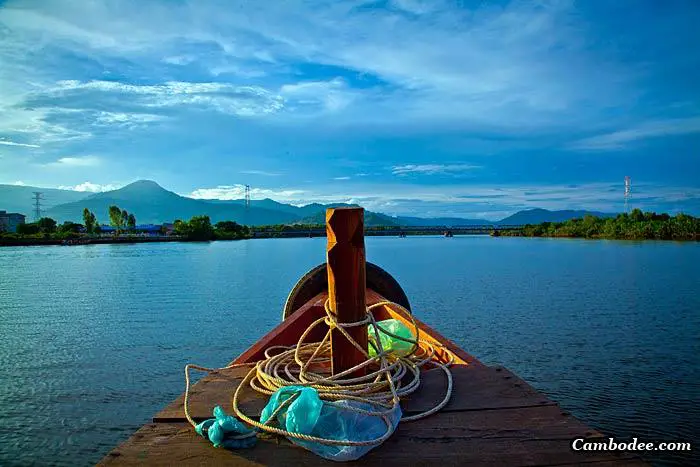
A small colonial town on a river, Kampot is the home of the famous Kampot pepper, which you can discover in the surrounding plantations. People also come for Bokor National Park and its old hill station, the salt fields, the cave temples (Phnom Chhnork) and sunset boat trips on the river.
Practical tips
- About 3 hours from Phnom Penh by bus or minibus, or by train (Phnom Penh – Sihanoukville line).
- Bokor can be visited by scooter or on an organised tour: it is cool at altitude, bring a jacket.
- Kampot combines very well with Kep, 30 minutes away.
Ride-hailing apps : Grab and PassApp
Kep
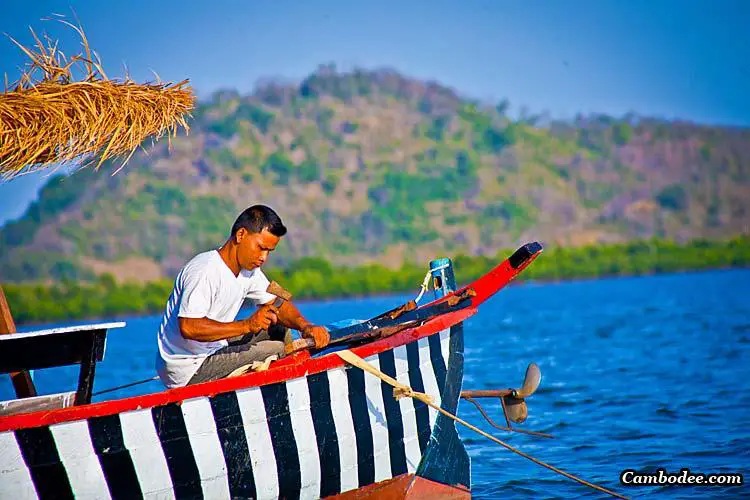
A chic seaside resort in the 1960s, Kep is famous for its crab market: crab with green Kampot pepper is eaten facing the sea. Walks in the small national park, abandoned modernist villas and a boat trip to Rabbit Island, Koh Tonsay.
Practical tips
- 30 minutes from Kampot and about 3 h 30 from Phnom Penh.
- Kep’s beaches are small: people come more for the atmosphere and the seafood than for swimming.
No Grab or equivalent here: tuk-tuk, motorbike taxi or boat, price to be negotiated.
Sihanoukville
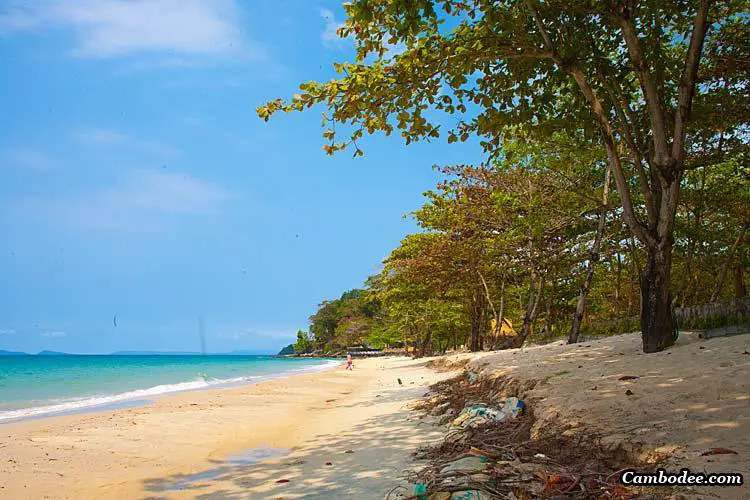
The country’s main port, Sihanoukville has been deeply transformed by casinos and building sites: today it is mainly the departure point for ferries to Koh Rong and Koh Rong Samloem. If you have to stay overnight, Otres beach is still the most pleasant, and Ream National Park is worth a trip (mangroves, wild beaches).
Practical tips
- 3 to 4 hours from Phnom Penh on the expressway (bus or minibus) or by train.
- Book the bus and ferry together if you are going straight to the islands.
Ride-hailing apps : Grab and PassApp
Koh Rong
The country’s largest island: white sand beaches (Long Set Beach, Sok San, Long Beach), jungle, snorkelling and bioluminescent plankton to watch at night. Koh Touch village, on the ferry side, is lively; the rest of the island is much wilder.
Practical tips
- Fast ferry from Sihanoukville in 45 minutes to 1 hour, several departures a day.
- Few ATMs: bring US dollars in cash.
No Grab or equivalent here: tuk-tuk, motorbike taxi or boat, price to be negotiated.
Koh Rong Samloem
Smaller and quieter than its neighbour, Koh Rong Samloem is the island for lovers of tranquillity: the large bay of Saracen Bay with its turquoise water, Lazy Beach, Sunset Beach and trails through the forest. Ideal for a few days of real disconnection.
Practical tips
- Ferries from Sihanoukville (about 45 minutes) and connections with Koh Rong.
- Electricity often limited in the evening and no ATM: bring cash.
No Grab or equivalent here: tuk-tuk, motorbike taxi or boat, price to be negotiated.
Kratie and the Mekong dolphins
On the banks of the Mekong, Kratie is where you go to see the rare Irrawaddy dolphins at Kampi, by boat, early in the morning or late in the afternoon. You can also cycle around Koh Trong island, with its traditional houses and orchards, and enjoy spectacular sunsets over the river.
Practical tips
- 5 to 6 hours by bus from Phnom Penh.
- An ideal stop on the way to Laos or Mondulkiri.
No Grab or equivalent here: tuk-tuk, motorbike taxi or boat, price to be negotiated.
Mondulkiri (Sen Monorom)
In the hills of the east, Mondulkiri offers a completely different Cambodia: cool air, forests, waterfalls (Bousra) and villages of the Bunong minority. This is also where you will find ethical elephant sanctuaries, where you watch the animals without riding them.
Practical tips
- 6 hours by road from Phnom Penh by minibus.
- Nights can be cool from November to February: bring a jumper.
No Grab or equivalent here: tuk-tuk, motorbike taxi or boat, price to be negotiated.
Frequently asked questions about travelling to Cambodia
Do I need a visa to go to Cambodia?
Yes, most nationalities need a 30-day tourist visa: the $30 e-visa on the official website evisa.gov.kh, or a visa on arrival at international airports. You must also fill in the free electronic arrival card (e-Arrival) on arrival.gov.kh within 7 days before arriving.
Can I travel overland from Thailand to Cambodia?
Not at the moment. All land border crossings between Thailand and Cambodia have been closed since June 2025 and no reopening date has been announced. You have to fly from Bangkok to Siem Reap or Phnom Penh, or go via Laos or Vietnam.
How much does it cost to visit the temples of Angkor?
The Angkor Pass costs $37 for 1 day, $62 for 3 days (valid for 10 days) and $72 for 7 days (valid for one month). It is free for children under 12. It is sold at the official ticket office in Siem Reap or online on the Angkor Enterprise website.
What is the best time to travel to Cambodia?
November to February, during the dry and relatively cool season. March to May is very hot, and the rainy season, from June to October, offers green landscapes, fewer tourists and lower prices.
Should I bring US dollars to Cambodia?
It is a good idea. The US dollar is used everywhere and ATMs charge a fee for every withdrawal. Bring notes in perfect condition, as damaged notes are often refused. Change under one dollar is given in riels.
Is there Grab in Cambodia?
Yes, Grab works in Phnom Penh, Siem Reap, Sihanoukville and Kampot, to book a tuk-tuk or a car at a fixed price. The local app PassApp also covers Battambang and Kampong Cham. Elsewhere, you have to negotiate with tuk-tuk drivers.
Find your hotel at the best price:
- Find a hotel in Siem Reap
- Find a hotel in Phnom Penh
- Find a hotel in Battambang
- Find a hotel in Kompong Chhnang
- Find a hotel in Pursat
- Find a hotel in Kampot
- Find a hotel in Kep
- Find a hotel in Sihanoukville
- Find a hotel in Koh Rong
- Find a hotel in Koh Rong Samloem
- Find a hotel in Kratie
- Find a hotel in Sen Monorom